Selecting Groundwater Bioremediation Products for Contaminants and Site Conditions
What are the best bioremediation products for contaminated groundwater? The best bioremediation products are those that match the contaminants, groundwater chemistry, geology, groundwater velocity, treatment method, and microorganisms present at a particular site. For anaerobic treatment of chlorinated solvents, nitrated explosives, nitrate, perchlorate, and certain toxic metals, an effective approach may require a slow- or fast-release electron donor, pH buffer, oxygen scavenger, bioaugmentation culture, or a combination of products.
Selecting groundwater bioremediation products based only on price or the amount of active material can overlook the factors that determine whether treatment will work in the field. The product must be distributed through the contaminated zone, retained where treatment is needed, and remain active long enough for contaminants, electron donors, and microorganisms to come together.
Start With the Contaminants in the Groundwater
Different contaminants require different biological and chemical conditions. RNAS products are primarily designed to support in situ anaerobic bioremediation, in which microorganisms use an electron donor as food while contaminants or other compounds function as electron acceptors.
This approach can be used for contaminants including:
- Chlorinated solvents such as PCE, TCE, DCE, vinyl chloride, TCA, and DCA
- Nitrated explosives such as RDX, HMX, and TNT
- Nitrate and perchlorate
- Certain toxic metals, including hexavalent chromium
The treatment mechanism is not identical for every contaminant. Chlorinated solvents may undergo reductive dechlorination, during which chlorine atoms are progressively replaced with hydrogen. Nitrated explosives can be transformed into less harmful compounds. Metals cannot be biodegraded or destroyed, but biological activity may change their oxidation state and reduce their mobility.
Because the treatment process varies, selecting the best bioremediation products begins with understanding the contaminants and the reactions required to treat them.
Match the Electron Donor to the Treatment Objective
Electron donors provide food for microorganisms and support the reducing conditions required for anaerobic bioremediation. RNAS offers both slow-release and fast-release electron donors because each type serves a different purpose.
Slow-release electron donors are suited to applications in which treatment must continue for an extended period. Vegetable oil ferments gradually, producing volatile fatty acids and molecular hydrogen that support anaerobic microbial activity. The oil can remain within the treatment zone while groundwater and dissolved contaminants move through it.
Fast-release soluble electron donors are immediately available to microorganisms. They may be used to establish reducing conditions quickly, supplement a slow-release product, or support applications in which frequent or controlled dosing is appropriate.
The best electron donor is therefore not necessarily the product with the lowest cost per pound. Hydrogen-production potential, release rate, mobility, retention, longevity, and compatibility with the injection method all contribute to its practical value.
Use Newman Zone 55 When Subsurface Distribution Is the Priority
Newman Zone 55 is a factory-prepared emulsified vegetable oil with small oil droplets designed for subsurface mobility. Its droplet size ranges from approximately 0.15 to 0.60 microns, with a median size of approximately 0.30 microns.
The small droplets allow diluted Newman Zone 55 to move through soil pores more readily than neat vegetable oil or a larger-droplet emulsion. After injection, the oil droplets adsorb to soil surfaces, helping retain the electron donor within the treatment area.
Newman Zone 55 contains both rapidly fermentable materials and slow-release soybean oil. The rapidly available materials help begin oxygen removal and establish reducing conditions, while the soybean oil provides food for microorganisms over a longer period.
This combination makes Newman Zone 55 appropriate when effective distribution is a central design requirement, particularly in finer-grained formations.
Use Newman Zone HRO When Greater Retention Is Needed
Small-droplet mobility is not always desirable. In coarse sand, gravel, fractured bedrock, or areas with fast groundwater flow, a highly mobile emulsion may move beyond the intended treatment zone.
Newman Zone HRO is a high-retention oil product prepared as a larger-droplet emulsion in the field. Its typical droplets range from approximately 1 to 10 microns. The larger droplets provide increased retention through interception and straining within coarse formations.
RNAS materials report approximately three times greater oil retention in sandy soils compared with a small-droplet emulsion. Newman Zone HRO may therefore be the better choice when the groundwater bioremediation design requires the electron donor to remain in coarse soils, fractured bedrock, or an aquifer with high groundwater velocity.
The distinction between Newman Zone 55 and Newman Zone HRO illustrates why there cannot be one universally best bioremediation product. The most appropriate oil-droplet size depends on the balance between distribution and retention required at the site.
Use Fast-Release Electron Donors When Rapid Availability Is Needed
RNAS offers two soluble electron donors for projects requiring rapidly fermentable material.
Newman Zone QR75 is a glycerin-based electron donor containing 75% fermentable material. It also supplies nitrogen, phosphorus, and vitamin B12. According to RNAS product information, QR75 provides approximately twice the hydrogen-production potential per pound of 60% sodium lactate.
Newman Zone QR90 contains glycerin and ethanol, with 90% fermentable content. It supplies approximately three times the hydrogen-production potential per pound of 60% sodium lactate and also includes nitrogen, phosphorus, and vitamin B12.
These soluble products can be used when fast electron donor availability is needed, either alone or with a slow-release electron donor. Their low-temperature handling properties can also be helpful during cold-weather groundwater treatment projects.
Determine Whether the Groundwater Requires pH Control
Anaerobic bioremediation can produce organic acids and carbon dioxide as electron donors ferment. At poorly buffered sites, these reactions may lower groundwater pH and inhibit microbial activity.
Neutral Zone is a colloidal calcium carbonate buffer designed for injection into contaminated soil and groundwater. Its small particles can move through the subsurface during injection and then remain in the treatment zone rather than washing away rapidly with groundwater flow.
Because calcium carbonate dissolves in response to acidity, Neutral Zone supplies alkalinity as it is needed. Its buffering action is self-limiting at approximately pH 8.5, reducing the risk of creating excessively alkaline conditions.
Where low pH or insufficient natural alkalinity could limit biodegradation, a long-lasting buffer can be as important as the electron donor itself.
Identify Whether Bioaugmentation Is Necessary
The required microorganisms are not always present in sufficient numbers to complete treatment. This is particularly important at sites contaminated with chlorinated ethenes.
SDC-9 is a bioaugmentation culture containing Dehalococcoides mccartyi and other microorganisms capable of supporting complete reductive dechlorination. It can be used when appropriate native microorganisms are absent, present at low concentrations, or unable to complete the transformation of chlorinated solvents to nontoxic end products.
Bioaugmentation should be considered separately from biostimulation. An electron donor stimulates microbial activity, while a bioaugmentation culture supplies specific microorganisms needed for the treatment process. Some contaminated-groundwater projects require both.
Remove Oxygen and Chlorine From Injection Water
Water used to dilute and inject electron donors or carry a bioaugmentation culture may contain dissolved oxygen or free chlorine. These conditions can interfere with the anaerobic environment and harm sensitive microorganisms.
Newman Zone OS is an oxygen scavenger used to treat injection water by removing dissolved oxygen and free chlorine. It also contains vitamin B12 to support microbial activity.
Treating the injection water helps preserve the anaerobic conditions needed when applying electron donors and bioaugmentation cultures.
Consider How the Products Will Reach the Contamination
The effectiveness of groundwater bioremediation depends on placing the selected products where they can interact with the contamination. RNAS materials emphasize a fundamental engineering challenge: contaminants, microorganisms, and electron donors must come together in the same place at the same time.
Common treatment configurations include:
- Direct injection through permanent wells
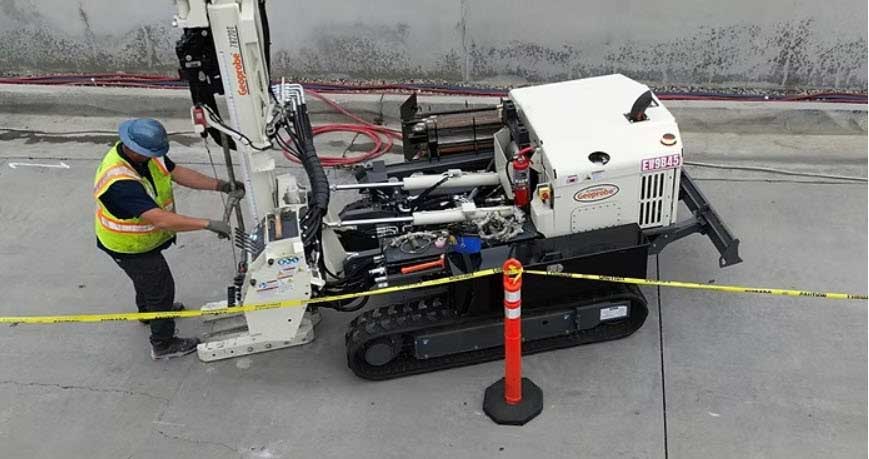
- Direct-push injection into contaminated zones
- Injection grids across source areas
- Recirculation between injection and extraction wells
- Permeable treatment zones or biobarriers placed across a groundwater plume
Injected products generally reach the more permeable flow layers first. Contaminants stored in lower-permeability silts and clays may diffuse gradually into these treated zones. Groundwater can also carry dissolved contaminants through a biobarrier over time.
For these reasons, a product may need to remain effective for years rather than months. Distribution, retention, and longevity must be evaluated together.
The Best Bioremediation Product Is the One Designed for the Site
The best bioremediation products for contaminated groundwater are not selected by choosing one product for every project. They are selected by matching product properties to the contaminant, treatment reaction, geology, groundwater movement, pH, microbial population, injection method, and expected treatment period.
The RNAS product line provides complementary options for these different requirements:
-
- Newman Zone 55 for slow-release electron donor distribution
- Newman Zone HRO for greater retention in coarse or high-flow formations
- Newman Zone QR75 and Newman Zone QR90 for rapidly available soluble electron donors
- Neutral Zone for long-term pH control
- SDC-9 for bioaugmentation of chlorinated-solvent sites
- Newman Zone OS for preparing anaerobic, chlorine-free injection water
This site-specific approach provides a more meaningful answer than declaring one product universally superior. The strongest groundwater bioremediation design is one in which product mobility, retention, longevity, chemistry, and biological function are coordinated with actual subsurface conditions.


0 Comments