A Sustainable approach to Bioremediation

In Situ Bioremediation Products for Reliable Subsurface Performance
RNAS develops crop-based bioremediation products for treatment of contaminated soil and groundwater. Our products are designed to support reliable in situ treatment across a wide range of site conditions.
Newman Zone EVO was the first off-the-shelf emulsified vegetable oil developed for bioremediation (U.S. Patent 6,806,078). For more than 20 years, RNAS has supplied proven, cost-effective remediation products used at sites worldwide.
Our products are available in various sizes depending on the use: 1 or 5-gallon pails, 275-gallon totes, and kegs or drums.
Contaminant-Specific Treatment Solutions
Tap or click to select a category to view typical sources and commonly-used products.
Chlorinated Solvents (PCE, TCE, DCE, Vinyl Chloride)
Found in: industrial degreasing, dry cleaning, and disposal sites
Applicable Products:
- Slow Release Electron Donors
Newman Zone EVO, Newman Zone HRO - Fast Release Electron Donors
Newman Zone QR75, Newman Zone QR90 - Oxygen Scavangers
Newman Zone OS - Bioaugmentation Cultures
SDC-9, SDC-9+, and TCA-20B
Heavy Metals (Lead, Mercury, Cadmium, Chromium)
Found in: Industrial and mining sources
Applicable Products:
- Slow Release Electron Donors
Newman Zone EVO, Newman Zone HRO - Fast Release Electron Donors
Newman Zone QR75, Newman Zone QR90
Nitrated Explosives (RDX, TNT, Nitrocellulose)
Found in: Military and munitions sites, mining and blasting operations
Applicable Products:
- Slow Release Electron Donors
Newman Zone EVO, Newman Zone HRO - Fast Release Electron Donors
Newman Zone QR75, Newman Zone QR90
Hydrocarbons (Gasoline, Diesel, Petroleum Products)
Found in: Leaks and disposal sites
Applicable Products:
- Contact RNAS for site-specific recommendations – Product selection depends on site conditions, contaminant type, and treatment goals
Our Leading Products
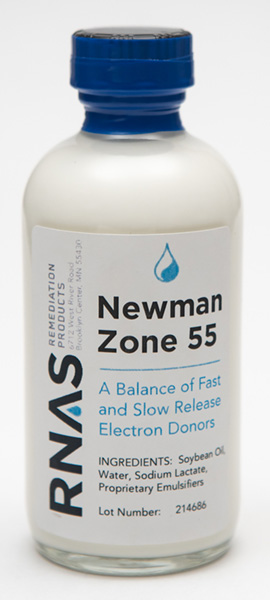
Newman Zone EVO
65% to 72% fermentable content
Small-droplet emulsified vegetable oil electron donor with fast-release lactate or ethanol for rapid microbial growth and slow-release soybean oil for sustained, long-term performance across a wide range of subsurface conditions.
BEST FOR: Chlorinated solvents, nitrated explosives, nitrate, perchlorate, and chromium VI in fine-grained soils and low-permeability environments
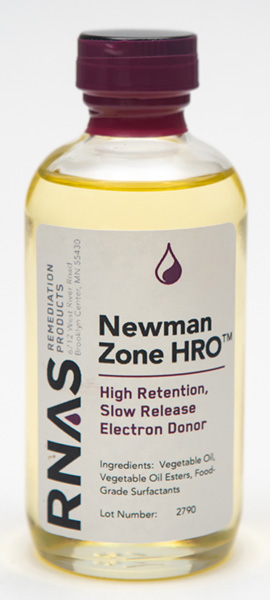
Newman Zone HRO
100% fermentable content
Field-emulsified, high-retention oil electron donor for long-term, slow-release performance in coarse soils and high-flow environments where smaller droplet EVOs may be too mobile.
BEST FOR: Chlorinated solvents, nitrated explosives, nitrate, perchlorate, and chromium VI in coarse soils, fractured bedrock, and high groundwater flow environments
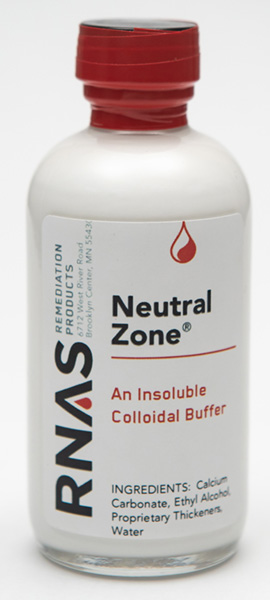
Neutral Zone
Colloidal calcium carbonate buffer that maintains neutral pH in groundwater and soil—preventing low pH inhibition (<6) and harmful high pH conditions (>9)
BEST FOR: Maintaining neutral pH during anaerobic bioremediation of chlorinated solvents, nitrate, perchlorate, and other treatment processes
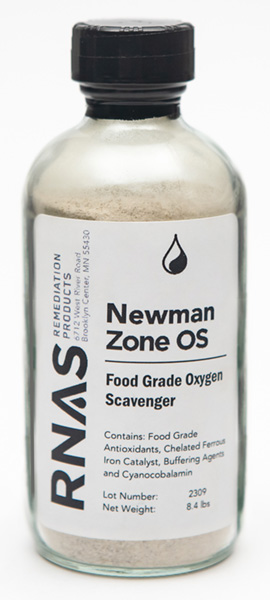
Newman Zone OS
Low-cost, fast-acting solution for removing dissolved oxygen and free chlorine to create anaerobic water for bioaugmentation and anaerobic bioremediation
BEST FOR: Preparing anaerobic injection water for bioaugmentation and reductive dechlorination of chlorinated solvents
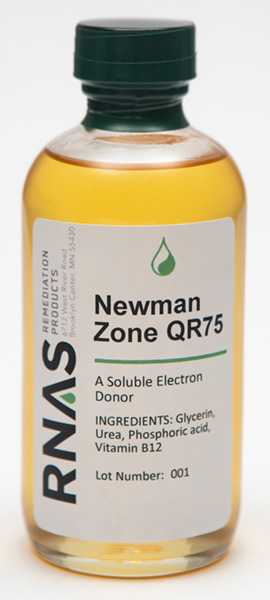
Newman Zone QR75
75% fermentable content
Glycerin-based, fast-release electron donor with nitrogen, phosphorus, and vitamin B12 for rapid microbial growth. Low viscosity, even in very cold conditions.
BEST FOR: Supplying fast release electron donor in circulation systems or for co-injection with a slow release electron donor like HRO. Easy to work with in cold weather and can even be used as antifreeze to protect injection equipment.
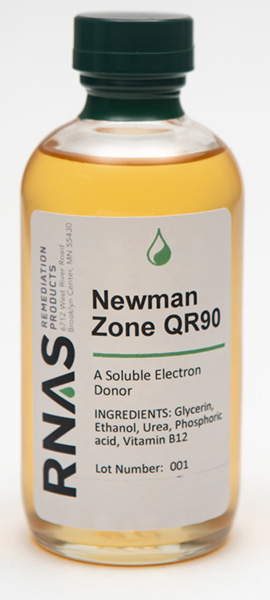
Newman Zone QR90
90% fermentable content
Glycerin and ethanol-based, fast-release electron donor with nitrogen, phosphorus, and vitamin B12 for rapid microbial growth. Low viscosity, even in extreme cold conditions.
BEST FOR: Supplying fast release electron donor in circulation systems or for co-injection with a slow release electron donor like HRO. Easy to work with in cold weather and can even be used as antifreeze to protect injection equipment.
Bioaugmentation Cultures
Targeted Cultures for Chlorinated Solvent Treatment
RNAS non-toxic, non-pathogenic, non-genetically modified microbial consortium cultures for the complete anaerobic dechlorination of chlorinated solvents. Specialized formulations are available for chloroethenes, chloroethanes, and mixed contaminant sites.
SDC-9 — For chloroethenes such as PCE, TCE, and DCE, supporting complete dechlorination to ethene.
TCA-20B — For chloroethanes such as 1,1,1-TCA, supporting complete dechlorination to ethane without the accumulation of undesirable daughter products.
SDC-9+ — For sites containing both chloroethenes and chloroethanes, supporting complete dechlorination to ethene and ethane, combining the capabilities of both SDC-9 and TCA-20B.
Why Environmental Professionals Choose RNAS
Built for Real Site Conditions
RNAS products are designed for how remediation actually happens in the field—not just under ideal lab conditions. Whether working in coarse soils, fractured bedrock, or variable groundwater flow, our formulations prioritize reliable distribution and retention where it matters.
Targeted Product Selection
Rather than a one-size-fits-all approach, RNAS offers clearly differentiated solutions: Fast-release donors for immediate biological activity, Slow-release donors for long-term treatment, Oxygen scavengers for rapid anaerobic conditioning, and Bioaugmentation cultures for targeted contaminant breakdown
Cost-Effective Without Compromise
Many competing products come with high material and injection costs. RNAS products are engineered to deliver equal or greater treatment performance with lower total project cost—especially over long-term applications.
Sustainable by Design
Our crop-derived electron donors support environmentally responsible remediation while maintaining high performance across a range of contaminants and site conditions.
USDA Certified Biobased
Most RNAS products are certified under the USDA BioPreferred® Program, verifying the use of renewable, crop-derived materials through independent testing.
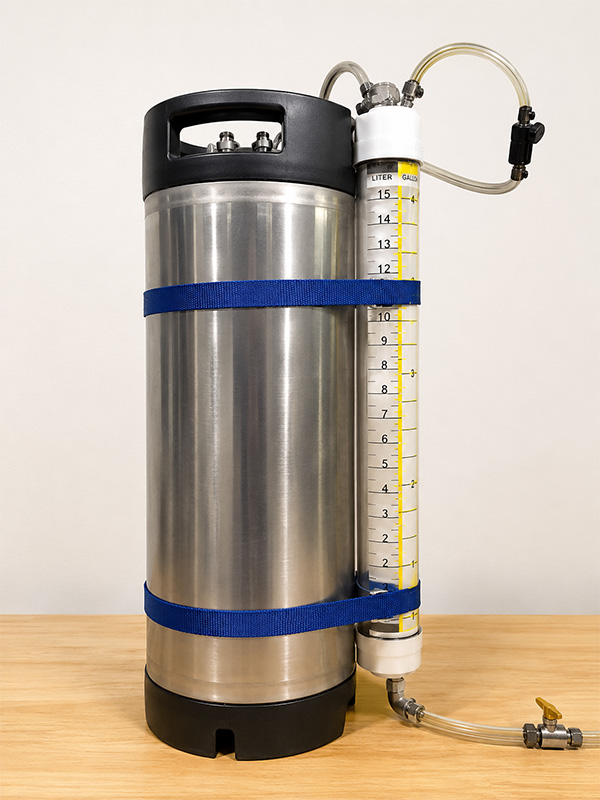
Equipment Rental
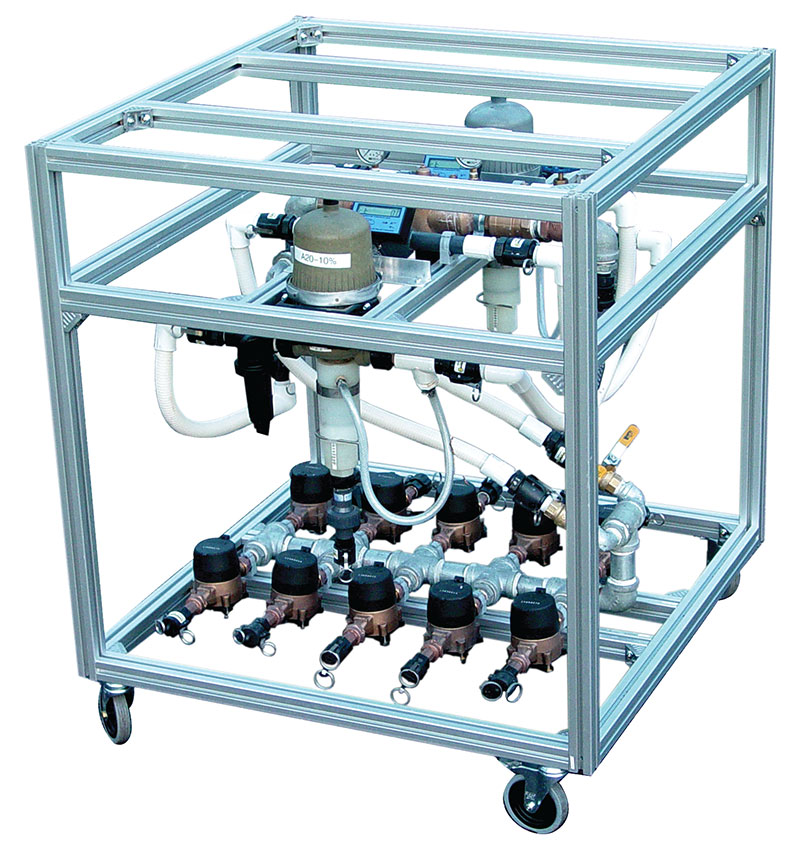
Rental injection systems are available for subsurface delivery of RNAS products.
Need Help Selecting a Product?
Talk with our team about your site conditions, contaminants, and treatment approach to determine the right product and/or equipment.