
Bioaugmentation Cultures
TCA-20B
Bioaugmentation culture for groundwater remediation
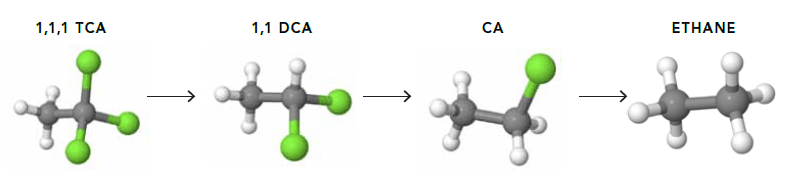
TCA-20B is a field proven, highly effective consortium of microorganisms for in situ bioremediation of chlorinated solvents. TCA-20B contains Dehalobacter spp. (DHBt) and several other halorespiring genera that consistently dechlorinate 1,1,1 -TCA to ethane without the accumulation of 1,1 DCA or chloroethane daughter products.
For sites where chloroethane reducing microbes are absent or present at low concentrations, bioaugmentation with TCA-20B provides the necessary bacteria for complete dechlorination to ethane. Even when native microbes are present, bioaugmentation can provide substantial benefits by using electron donor more efficiently and by increasing dechlorination rates to quickly reach your treatment goals.
Why TCA-20B Bioaugmentation Culture
Bioaugmentation with TCA-20B ensures complete reduction of chloroethanes to harmless ethane.
Remediation of chlorinated ethanes has often led to accumulation of daughter products such as 1,1-DCA and CA.
TCA-20B was derived from a site contaminated with 1,1,1-TCA and 1,1-DCA and enriched to develop a culture capable of rapidly reducing chloroethanes to harmless ethane.
Complete Dechlorination
Contains Dehalobacter spp. (DHBt) and several other halorespiring genera that consistently dechlorinate 1,1,1 -TCA to ethane without the accumulation of 1,1 DCA or chloroethane daughter products.
Higher Dechlorination Rates
Has shown degradation rates of 1,1-DCA as high as 20 mg/L/day and has even shown to degrade CA as well at rates up to 3 mg/L/day.
Prevents Inhibition of Dehalococcoides
Trihalogenated chloroethanes and fluoroethanes can inhibit Dehalococcoides mccartyi (Dhc) activity preventing effective chloroethene reduction to non-toxic ethene.
Rapid Reduction
Bioaugmentation with TCA-20B rapidly reduces the trihalogenated chloroethanes allowing Dhc microbes to effectively reduce chloroethenes to ethene.
Technical Details
How it Works
1. TCA-20B delivers Dehalobacter spp. (DHBt), several other halorespiring genera and other beneficial microorganisms to the treatment zone.
2. Supports reductive dechlorination
TCA-20B is the only bioaugmenation culture that is proven to rapidly and reliably reduce chloroethanes to ethane.
3. Improves treatment performance
TCA-20B has shown degradation rates of 1,1-DCA as high as 20 mg/L/day and has even shown to degrade CA as well at rates up to 3 mg/L/day.
Application & Handling
- Commonly injected with anaerobic chase water or co-injected with anaerobic water and electron donors
- This approach minimizes oxygen exposure while helping distribute TCA-20B microbes throughout the treatment area.
- We recommend preparing anaerobic water with the Newman Zone OS oxygen scavenger to both remove oxygen and free chlorine from tap water.
Contaminants Treated:
1,1,1-Trichloroethane, 1,1-Dichloroethane (1,1-DCA), Chloroethane (CA), Tetrachloroethene (PCE), Trichloroethene (TCE), Carbon Tetrachloride (CT), Chloroform (CF), Dichloromethane (DCM), Tetrafluoroethane (TFE)
Culture Characteristics
- pH 6.0 – 8.0
- Density 0.9-1.1 g/cm3
- Appearance: light greenish, murky liquid
- Odor: musty
Packaging & Storage
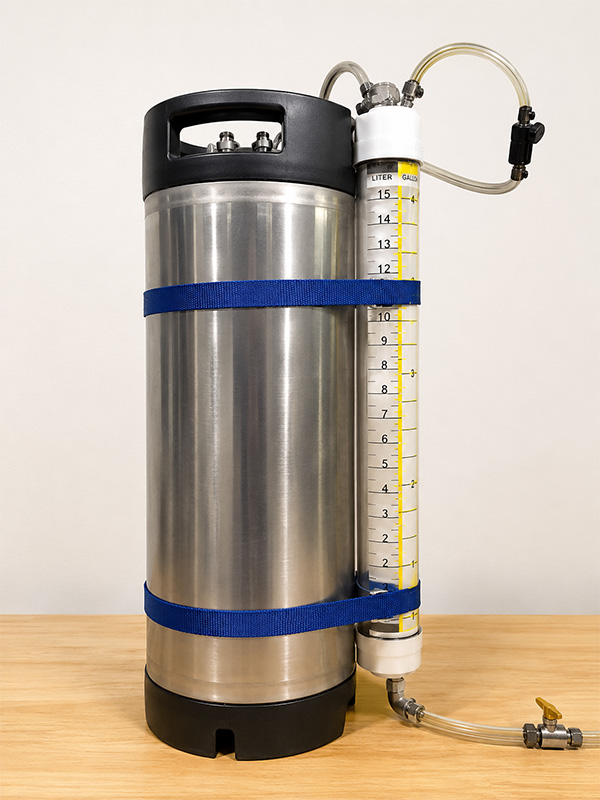
- 19 L stainless steel kegs
- Pressurized with nitrogen
- A basic dispensing system provided by APTIM (see manual). An inert gas regulator and a small tank of argon or nitrogen need to be provided by the user.
- RNAS Microdosing system allows for more precise measurement of small volumes of culture. Includes an inert gas regulator, refrigerant scale, valve box and micro-dose measuring system. A small tank of nitrogen or argon needs to be provided by the user.
Storage:
- Store at 2–4°C, culture activity rapidly deteriorates at higher temperatures
- Shelf life up to 3 weeks or more when on ice or refrigerated
- Avoid freezing
- Avoid exposure to oxygen
Safety
Non-toxic, non-pathogenic, non-genetically modified microbial consortium. No known hazards under normal use conditions. PPE recommended during handling.
Need help planning a bioaugmentation program?
Talk with our team about dosing, injection sequencing, and integrating SDC-9 with anaerobic water and electron donors.